Portuguese Jesuits with Chinese, Japanese, and regional artisans
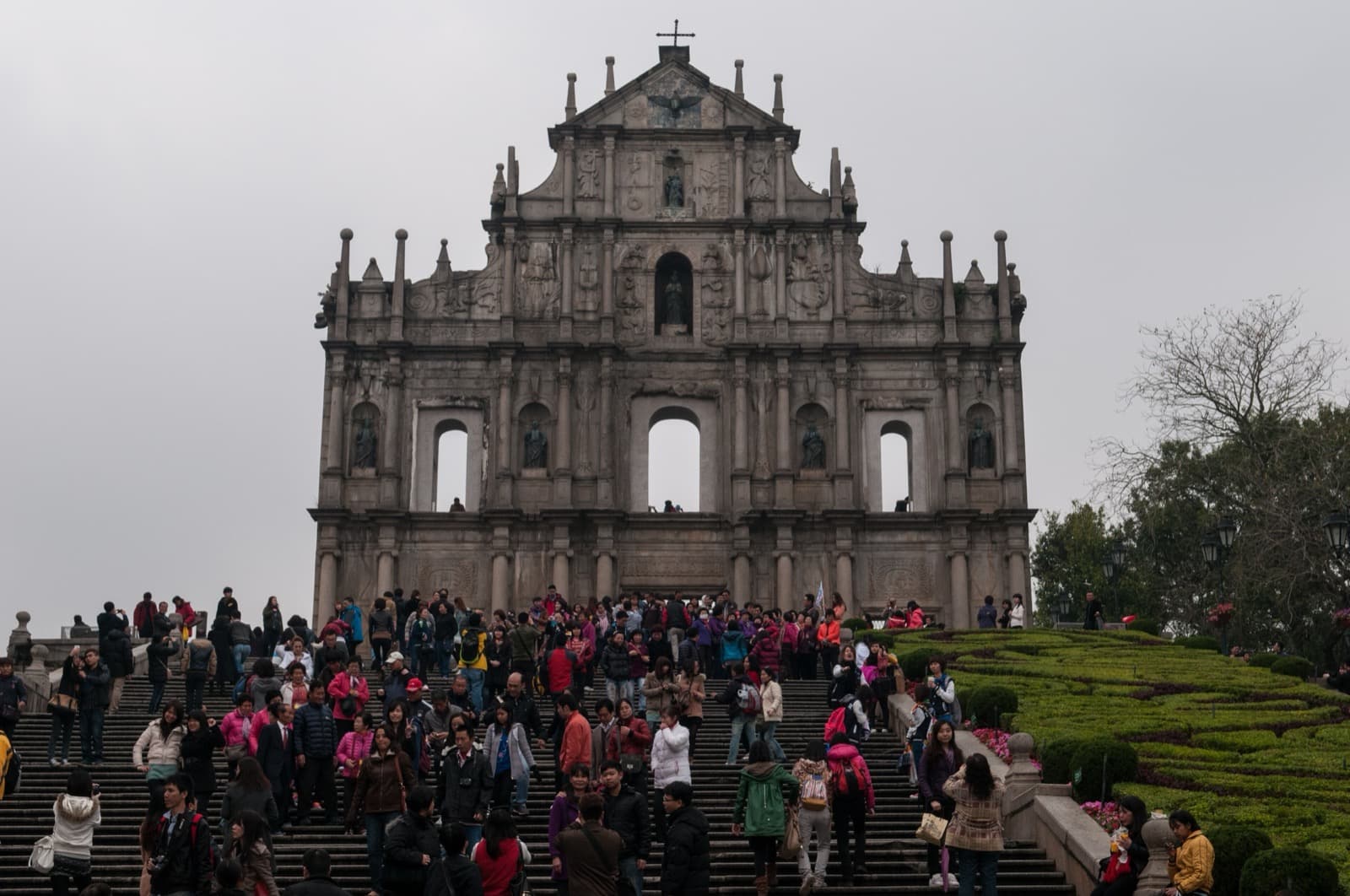
The facade is a record of Jesuit, Portuguese, Chinese, Japanese, and regional craft exchange.
History
From St. Paul's College and the 1835 fire to UNESCO World Heritage inscription.
Design read
Built
Facade height
Fire
The facade is a record of Jesuit, Portuguese, Chinese, Japanese, and regional craft exchange.
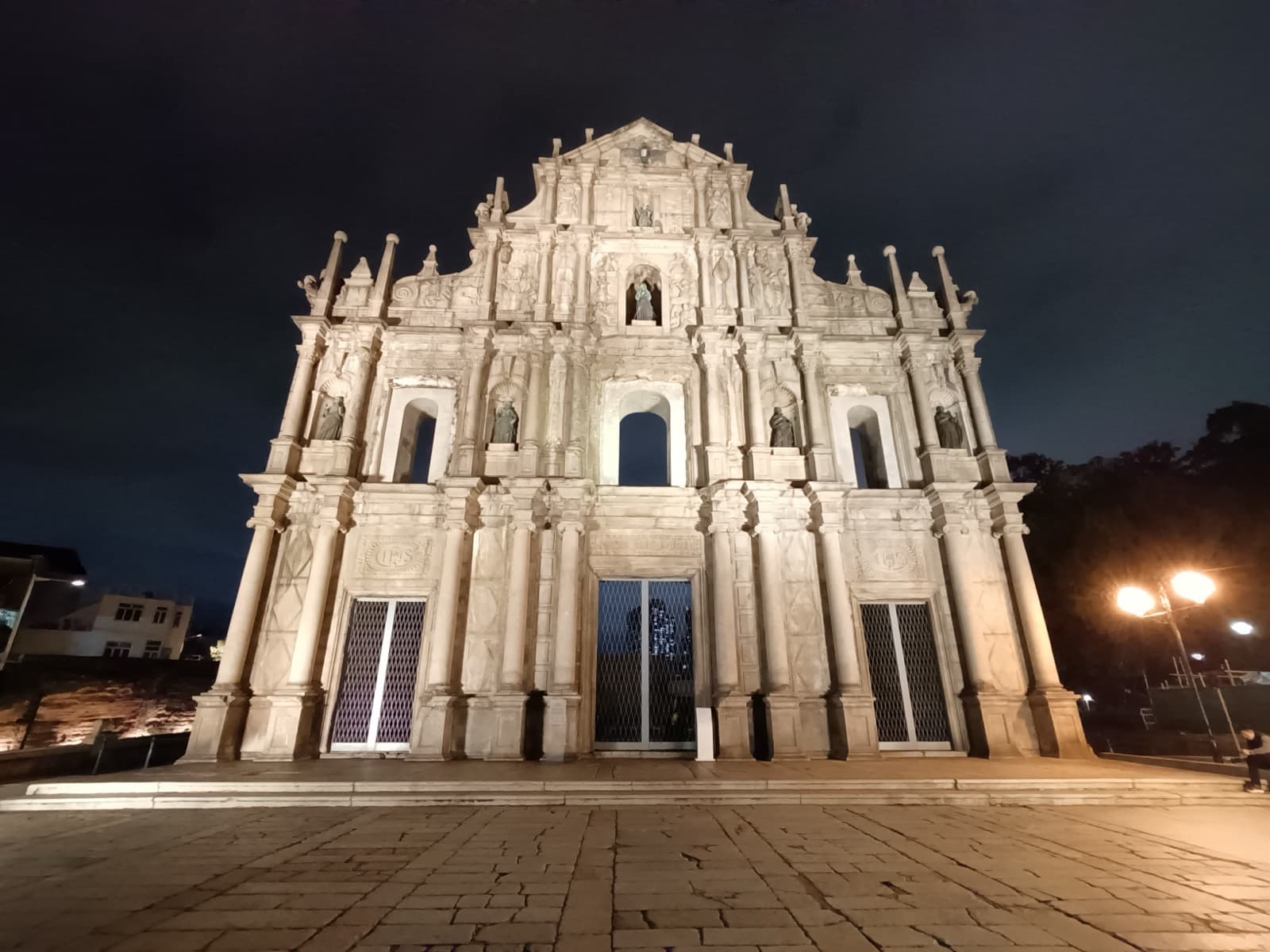
Official World Heritage interpretation reads the wall as five symbolic levels, not a single decorative surface.
The Jesuit college beside the church complex became a major missionary and learning base in the Far East.
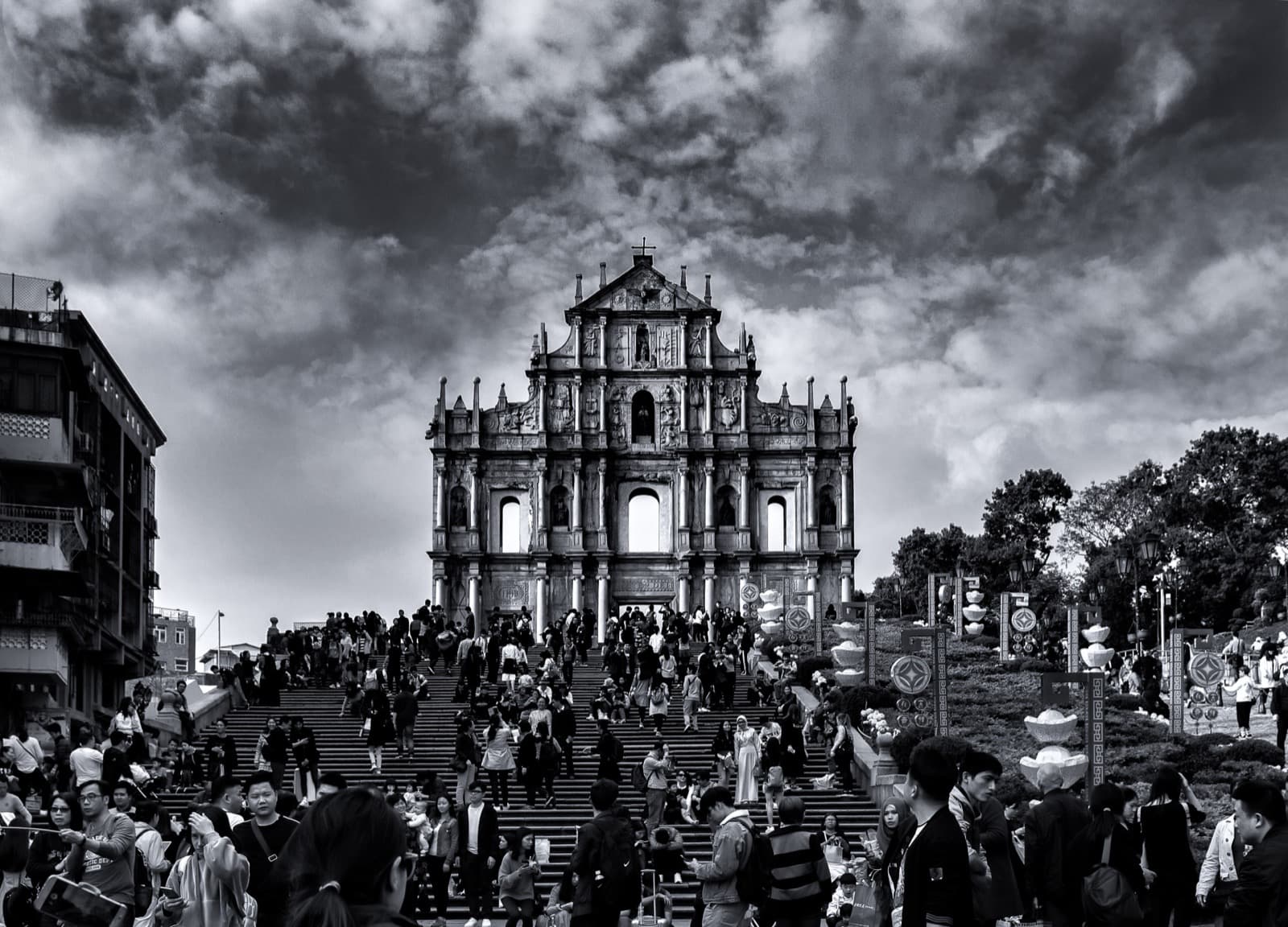
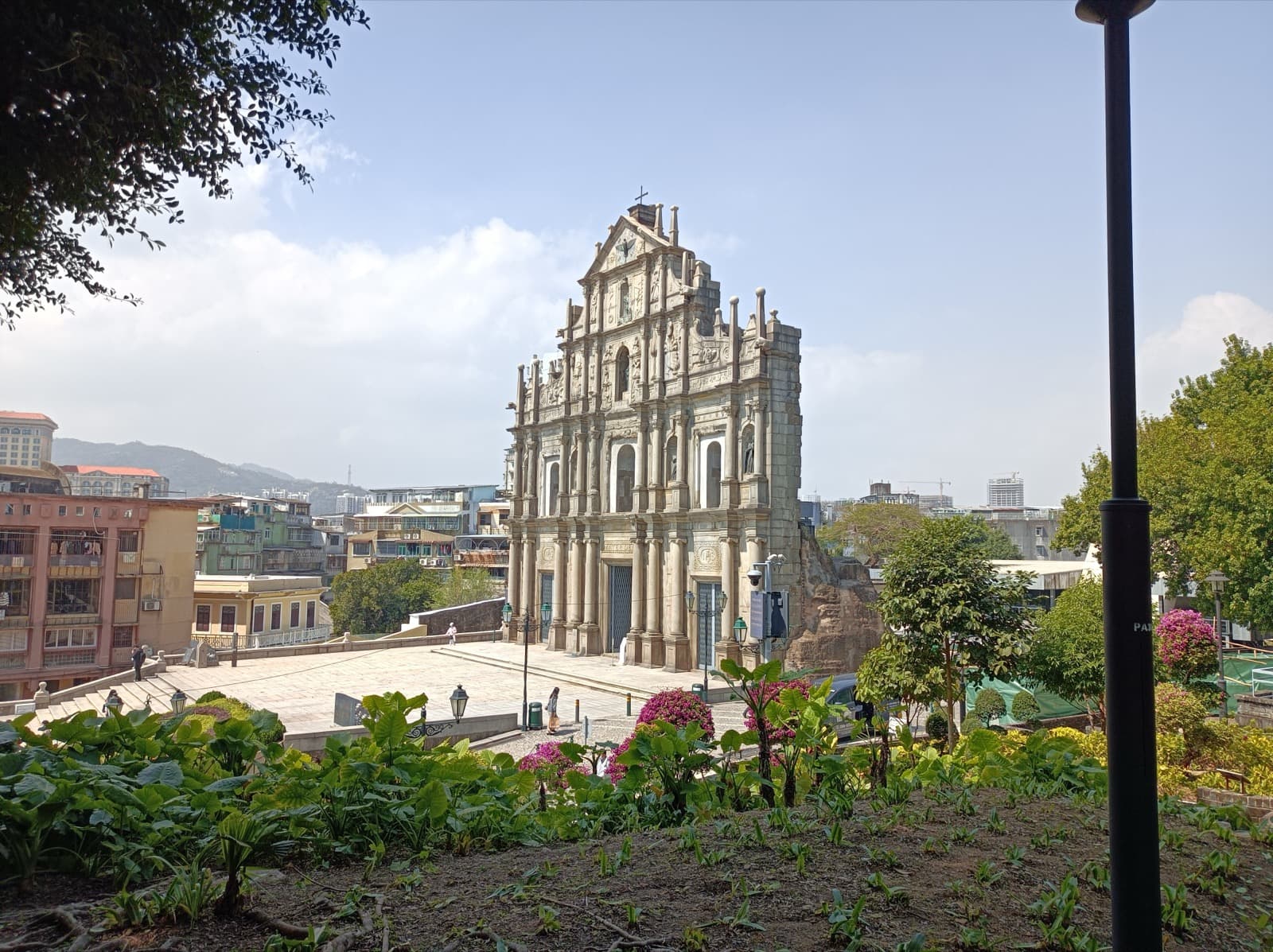
The stone facade and stairway belonged to the Church of Mater Dei, formed through Portuguese Jesuit direction and regional artisan collaboration.
A fire destroyed the religious complex, leaving the granite facade, stairway, and archaeological remains as the surviving public image.
Government-led archaeological work studied the church organization, recovered objects, and prepared the Sacred Art Museum and Crypt.
The Sacred Art Museum and Crypt opened on 23 October 1996 at the former main altar location.
The ruins sit within the Historic Centre of Macao, a UNESCO World Heritage landscape of long East-West exchange.
Photo references
Every image is carefully sourced and credited to its original historical record.
BenjPhoto
Michal Osmenda
K.Y.K.Z.K.
K.Y.K.Z.K.
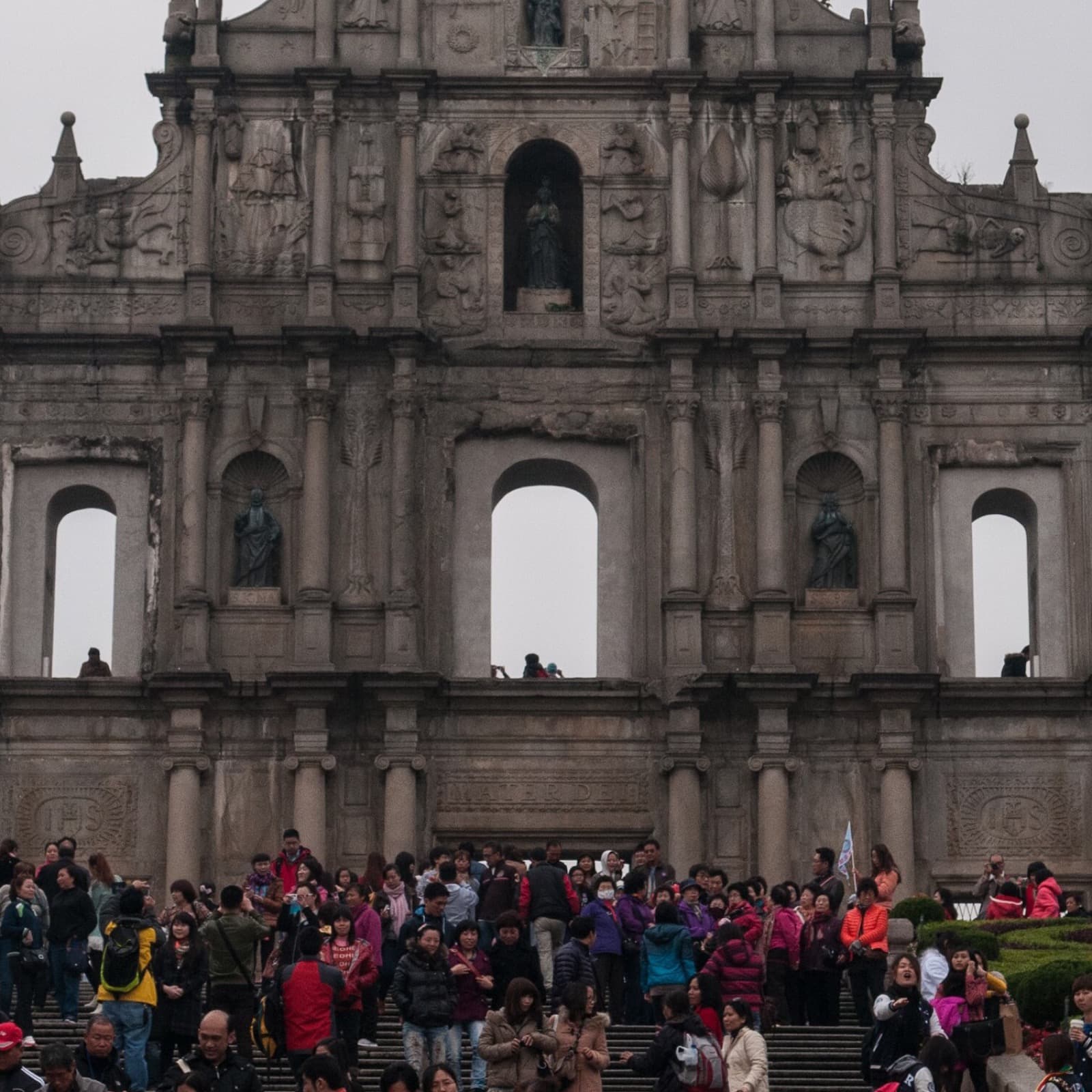
Michal Osmenda / local editorial crop
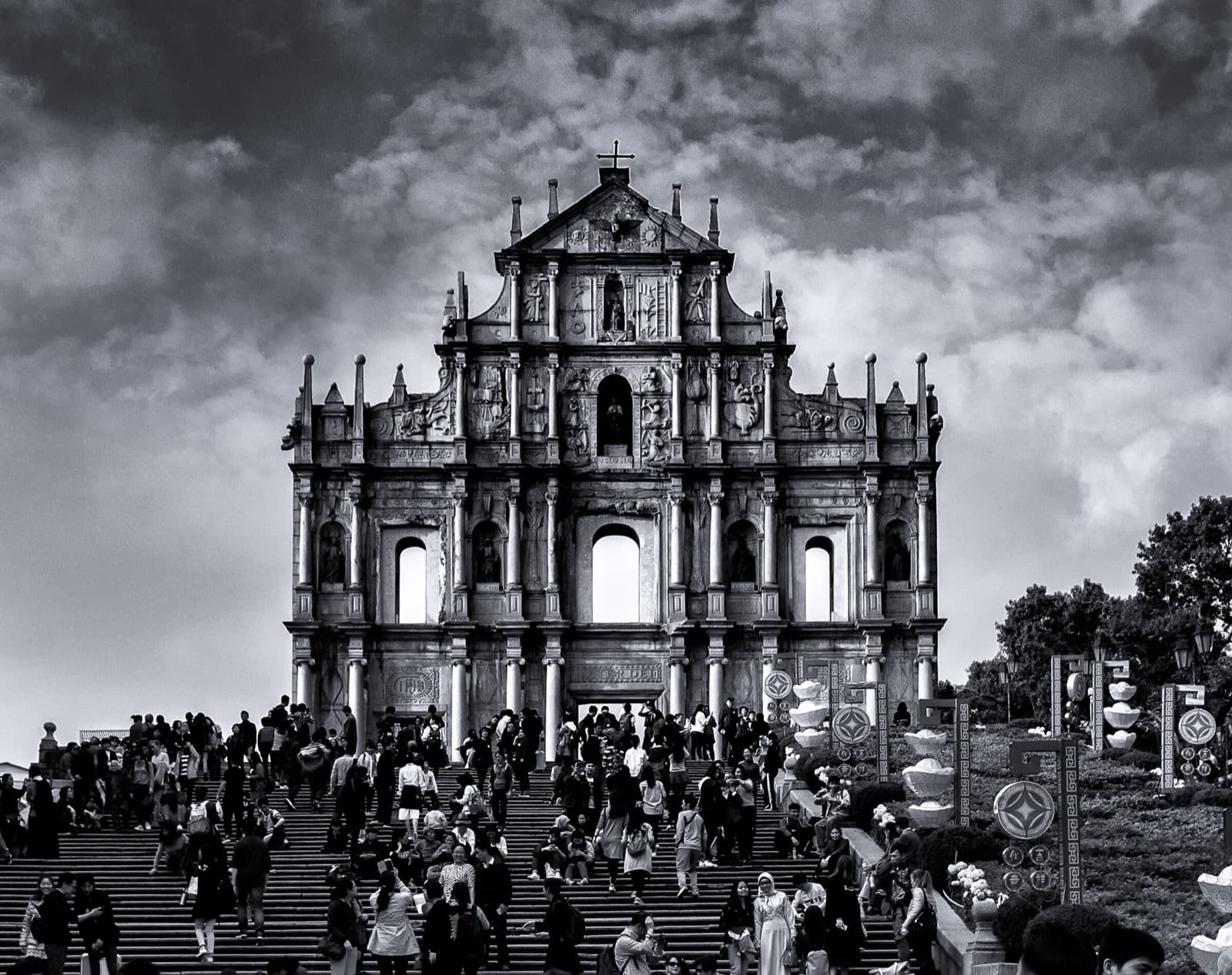
BenjPhoto / local editorial crop